Given the right product, 100% Whey Protein Shakes are an easy way to add protein and vital amino acids to your diet. When you make it with full fat milk, you add important Phospholipids that boost cell and Mito membrane health. To really boost your daily nutrition, combine your Whey Protein Shake with Nucleotide-rich foods such as eggs, or a Nucleotide-rich supplement like Brewer’s Yeast. As a post-workout recovery shake, drink a Whey Protein Shake as soon after your workout as possible. You can also use it as a quick and nutritious breakfast-on-the-go.
RECIPE: HealthMito’s Homemade 100% Whey Protein Shake:
No junk. No fillers. No artificial sweeteners. No carrageenan! And since you have complete control over the sweetness with just a tiny bit of Monk Fruit Extract, no more icky sweet with an awful aftertaste.
The HealthyMito “chocolate fudge flavor-base” is the easiest and tastiest way to be ready to make shakes every morning in a jiffy. Not only does It speed up the process of making your daily shakes, it also gives you a rich, chocolate flavor you simply can’t get from using raw cocoa in your mix (though raw isn’t horrible… the cooked-down flavor base provides a much better flavor without the chalky texture).
My mom always boiling down cocoa mixed with sugar and a little salt in a bit of water until it produced an amazing hot fudge to pour over ice cream sundaes. The next morning, she took the leftover hot fudge, heated it back up, added milk and a splash of vanilla. The end result was the best hot cocoa ever. Reflecting on this fond childhood memory, I devised my flavor base recipe for my Homemade Protein Shakes.
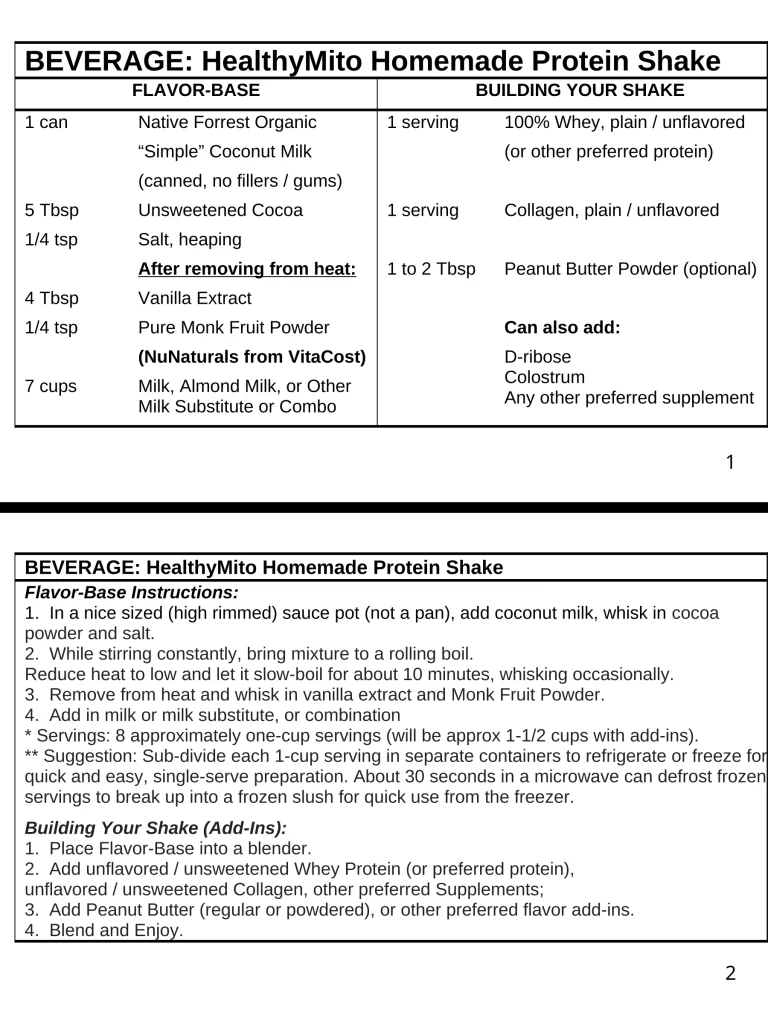
Whether you plan to refrigerate or freeze the Flavor-Base, for pre-portioned servings easy to prepare, I highly recommend storing the Flavor-Base in separate containers as 1-cup servings (it will be about 1-1/2 cups after you add your Add-Ins and blend it up).
Depending on the expiration date of your milk / milk substitute, these shakes can last for a week, easily in your refrigerator. If you need them to last longer, (say you have an unexpected trip, you ended up skipping using them for a couple days, or you wanted to bulk-prep your shakes), freezing the Flavor-Base is an excellent option for longer storage.
TIP: When freezing your individual servings, if you need your containers back before you need your Flavor-Base, simply run the bottom of the frozen storage container under tap water for a second or two (doesn’t need to be hot), apply slight pressure to the bottom of the container, and the frozen liquid will fall right out. Then place your frozen liquid in a zip back or other container and put it back the freezer for when you are ready for it. (This works with soup, chili, and other solid-mass frozen foods too!)
WHAT IF YOU RAN OUT OF FLAVOR-BASE BUT STILL NEED A SHAKE?
It won’t taste as good as making and using the Flavor-Base; but if you’re in a pinch, you can still made a homemade protein shake. I do recommend using a blender so the cocoa powder mixes sufficiently.
PLACE WET INGREDIENTS IN A BLENDER:
1 cup – Whole Milk — OR — Almond Milk
1 to 2 Tbsp – Coconut Milk (blended with cream/fat) OR Plain Greek Yogurt
1 tsp – Vanilla Extract
1 to 3 dashes (or one teeny, tiny dipper spoon) (or to taste) – NuNaturals Pure Monk Fruit Powder
OPTIONAL: 1 to 2 Tbsp – Peanut Butter Powder or a Natural Creamy Peanut Butter
MIX DRY INGREDIENTS TOGETHER FIRST THEN ADD TO THE WET INGREDIENTS ABOVE:
1 scoop/serving – Whey Protein, unflavored (100% pure, plain, no fillers)
1 serving – Collagen Powder
2 Tsp – Hershey’s Cocoa Powder
2 to 3 dashes – Salt
Any other dry-ingredient add-ins / Supplements you want to add
OPTIONAL BUT HIGHLY RECOMMENDED:
1 to 2 tsp – D-Ribose
DIRECTIONS: Blend it until smooth, throw it in a shaker cup and you’re ready to go.
*Note: The addition of D-Ribose allows the building blocks for the formation of new ATP. The addition of Collagen Powder adds additional protein and amino acids to the shake content.
VARIATIONS:
Fruit flavored shakes are possible, just leave out the chocolate and the peanut butter and replace it with your favorite fruits and/or berries. But you will need to use stronger flavored fruits such as peaches and berries. However, you will be shocked at how much “REAL” fruit it takes to flavor a fruit-flavored shake. If you are watching your carbs (doing keto / low carb), this is probably not an ideal flavoring option.
HEALTHYMITO HOMEMADE PROTEIN SHAKE
PRODUCT RECOMMENDATIONS:
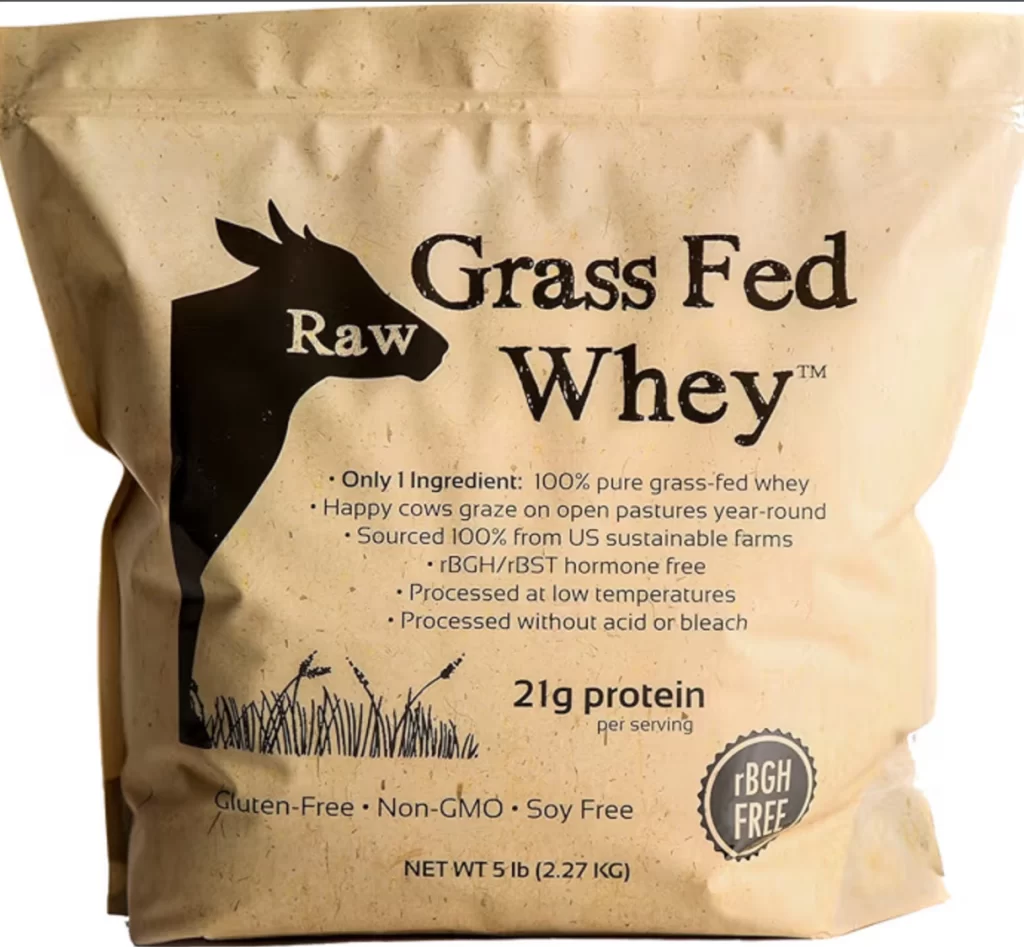
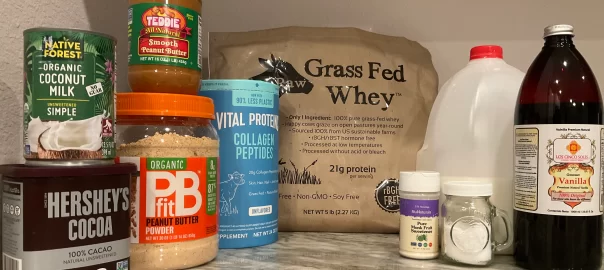
100% Whey Protein Powder: Ideally, you are looking for minimally processed, Grass Fed 100% Whey Protein Concentrate (unflavored). This brand, “Raw Grass Fed Whet”, is Non-GMO, rBGH/rBST hormone free, and their filtration process gives you a quality product that blends easily and provides a smooth result.
 Canned Coconut Milk: This is not the boxed milk substitute, rather it is the canned milk that comes with the coconut fat. I am always looking for the cleanest products and the best one I’ve found is from Native Forest and the specific product is their Organic Coconut Milk “Simple”. Ingredients are “simply”: organic coconut and filtered water. A close second is Goya Coconut Milk.
 Collagen Powder: A good Collagen supplement should contain high-quality collagen peptides with a variety of amino acids. Some products also contain other vitamins/minerals that help with the absorption and utilization of the Collagen. One very necessary co-factor that boosts absorption and utilization of collagen peptides is Vitamin C. If your brand of collagen does not contain Vitamin C, you should add it to your intake of collagen. Also look for a collagen powder that dissolves quickly, even effortlessly, in any liquid. Unflavored varieties expand your options and opportunities to use this fabulous addition to your nutrient intake; having little to no taste, allowing for ease of use in drinks, shakes and smoothies, and sprinkled in soups, etc. The one I’ve grown to like best, both for the quality of the product and the price, is Vital Proteins Unflavored Collagen.

D-Ribose: Please note that if you have a corn allergy, the majority of D-Ribose on the market is sourced from corn. There are alternatives but they are more expensive and more difficult, but not impossible, to find.
Greek Yogurt: The trend for the last generation or so has been that of low or no-fat products. The yogurt industry has been consumed by this notion of fat being unhealthy. Contrary to popular belief, eating healthy fats do not contribute to weight gain. Healthy fats are important to overall health and energy production and milk fat also contains Phospholipids. Moderate healthy fat intake should be a part of your diet (unless you have a fatty acid oxidation issue unable to be mediated). It took me a long time to find a brand of yogurt that was not low or no-fat. Cabot’s and Fage both carry a plain, full-fat Greek yogurt that are available in my area with no sugar added, and it also DOES NOT contain Carrageenan.
UPDATE AS OF 2025: It FINALLY seems other brands are starting to catch on and offer PLAIN FULL FAT GREEK YOGURT. Read your labels. You are looking for simple ingredients, no Carrageenan or added “gums”, higher fat content and lowest sugar content.
 Monkfruit Extract – Powder: I’ve look far and wide for a good, keto-friendly sweetener. I have a few different ones depending on what I’m using it for. For shakes and my nighttime herbal tea, my pick is NuNaturals Pure Monk Fruit Sweetener. It has no fillers; just powdered Monk Fruit extract. Best place I’ve found to buy it is Vitacost.com, and I purchase it in bulk any time they run a sale that applies to this product; though it is starting to pop up in stores as well.
 Peanut Butter: As with everything, you are looking for few ingredients and simple, clean ingredients.
Peanut Butter Powder: Some people prefer to use powder. It is easier to scoop than peanut butter. And even though you are missing out on licking the spoon, you are also avoiding the oily mess, excess sugars, and other added ingredients. Just make sure to read the ingredients. Look for brands that contain as few ingredients as possible. Several brands contain corn syrup solids. I personally don’t see much benefit to the powder. I don’t prefer the flavor and you might get one less carb but also less fat… Don’t be afraid of the fat.
 Vanilla Extract: I admit it, I’m a vanilla snob. After trying all the major brands available in grocery stores, and after Costco changed their suppler to a not so great one, I went international… literally. On a cruise to Mexico, I ran across the best vanilla I’ve ever had (and Mexico had a lot of different brands to choose from). But my hands-down favorite is Los Cinco Soles. And I buy it in bulk because I use it for so many different recipes. If you happen to be in Cozumel, I highly recommend buying 4 or 5 large bottles. They were running $18 per liter, which is pretty darn cheap for a really good vanilla. Otherwise you can order it online. Definitely not as cheap, BUT still the cheapest vanilla around at approx $35 for a liter (that includes shipping). The smell is amazing and the taste is extraordinary.
Los Cinco Soles – Vanilla Extract
LEARN ABOUT DIFFERENT FORMS OF WHEY
Whey protein is a very popular way of delivering both high protein that is easily digestible (absent dairy sugar and/or protein digestive issues and some products even contain dairy digestive enzymes) and a comprehensive amino acid profile important to cells, tissue, muscle and bone health and energy production.
“Whey concentrate” has undergone less filtration and contains more fat, lactose and other components.
“Whey isolate” has had additional filtration that removes more of these components and you get a more “isolated” form of protein and amino acids.
Tip: If you are looking at the nutritional facts on a particular product, look at the serving size (in grams) and compare that figure with the total grams of protein. There will always be some difference between these two numbers. However, the wider the difference, the more filler ingredients are being used in the product.
The filtration process is also important. Processing should always be under low heat and low acid conditions so the protein is not denatured. This allows the Whey to remain biologically active (a fancy way of saying it will actually have an effect).
Additionally, there are several other filtration methods advocated for by their manufacturer, such as cross-flow micro filtration. Each company seems to boast that their filtration process is the better product. It is hard to find specifics on exactly what these many methods entail. However, there is one process that should be of concern, Ion Exchange. As the name would imply, it has the potential of changing the charges associated with the different nutrients in the Whey and can also work to destroy key components of it, which one could speculate would change the effectiveness or even usefulness of what remains. Ion Exchange also utilizes hydrochloric acid and sodium hydroxide. So if you are interested in avoiding as many chemicals as possible, you would want to avoid products processed in this way.
There is also the discussion of Whey verses Casein protein. They are both derived from milk. Here is the quick and easy on this:
Whey: Whey breaks down quicker and is more easily absorbed. If it is processed appropriately, Whey should contain all the major amino acids required by humans, including the “essential” branch-chain amino acids (BCAAs) that can’t be produced by the body and thus must be derived from food sources. Whey stimulates muscle synthesis (growth), which contributes more stem cells that facilitate that growth. Used in conjunction with quick-burst, weight bearing exercise, this muscle gain should increase both the total number of Mito and improve their overall functional capacity, as opposed to simple cell turnover.
Casein: Casein is higher in overall protein, but unless you are truly body building this could mean too much protein consumption. Casein is slower to digest and includes a slower release of the amino acids it contains. The biggest benefit to Casein would be its ability to inhibit protein breakdown (where as Whey stimulates building muscle). So if muscle wasting (protein cannibalism) is an issue, adding Casein to your Whey protein intake may be of some benefit. But it would likely be more beneficial to add some Casein to your intake verses substituting it in place of Whey because Whey provides more benefits in regards to recovery from physical activity and in feeding energy production through amino acid delivery.